Beyond the Pointe: Misconceptions and the Science Behind Being En Pointe
It is almost like magic how ballerinas can stand on their toes, right?
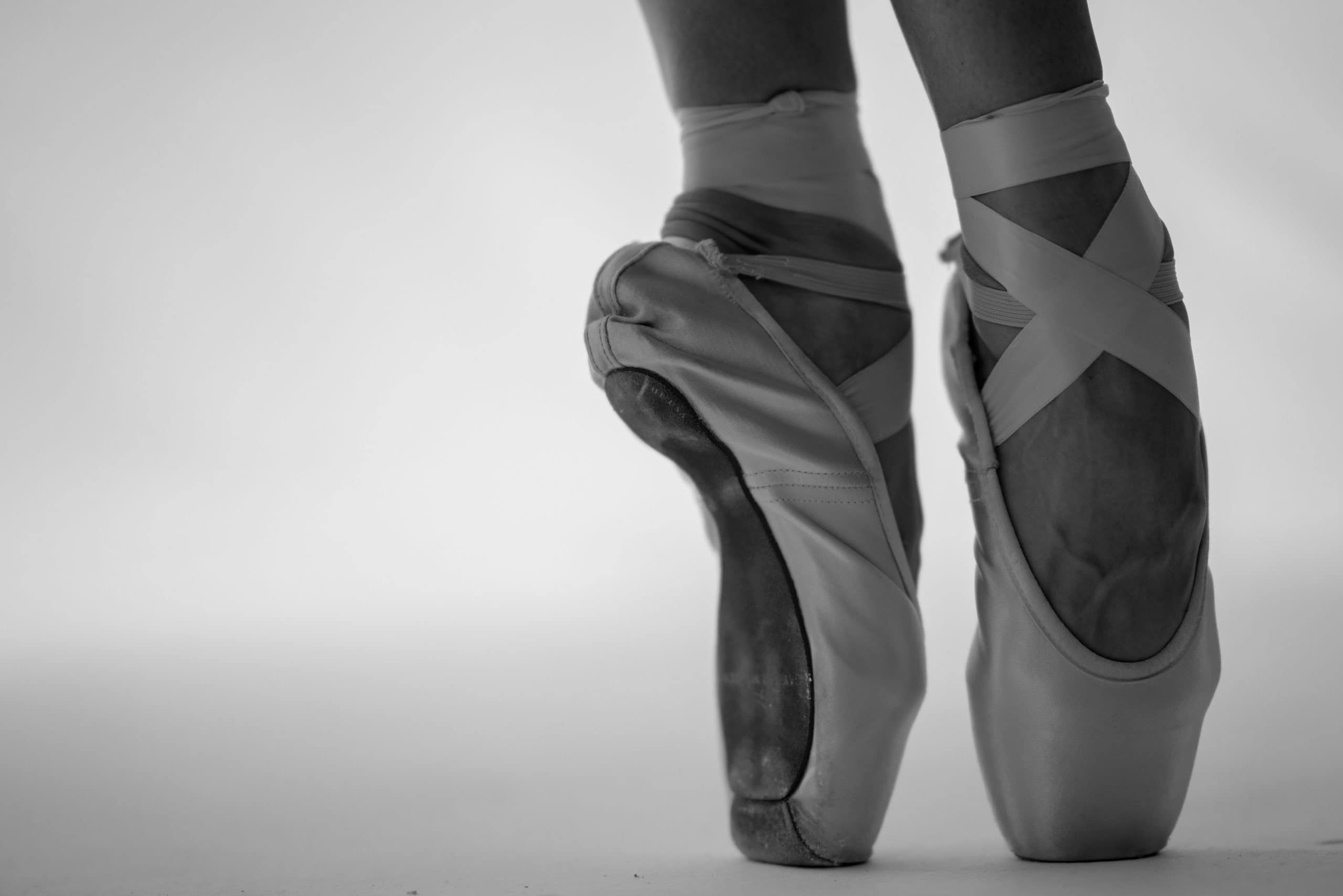
Recently, the comments section of singer ADÉLA’s new dance video for “Death By Devotion” has been filled with comments not describing how much they loved the performance but debating whether the pointe shoes she was wearing were legitimate. Many had, apparently, assumed it was either a wooden box wrapped in magical satin or a device of torture on her feet. To those familiar with ballet, the wild theories around the pointe shoe may seem comical. However, beneath the humor is an underlying question: How much do people really know about the pointe shoe?
When watching “The Nutcracker”, “Swan Lake”, or “Giselle,” most of the prima ballerinas (the lead female ballerina of a company) and the background ballerinas wear intricate satin shoes to support their feet. Every turn and leap these ballerinas take must land on a tiny box located at the tips of their feet.
At a glance, this looks physically impossible. But behind this seemingly unthinkable technique, the pointe shoe and the ballerina are both trained and made to withstand this test of gravity. Still despite the training and engineering behind pointe shoes, misconceptions about it persist. Thus, people take it upon themselves to make incorrect assumptions about the pointe shoe and what it does for a ballerina, but the real mechanisms and science behind the pointe shoe can truly debunk these myths.
The Mechanics and the Myths of the Pointe Shoe
While most people think that pointe shoes are made of a special wooden platform, this is far from the truth. In fact, the rigid front of the shoe is called a box, and it is constructed like a paper mache, where paper strips or paper pulp are mixed with a glue or starch paste and shaped over a base. The manufacturer carefully hand-makes the box by layering strips of canvas, denser paper strips, and binding them together with a paste-like glue.
The choice of these natural materials is essential for the health of the ballerinas’ feet and intentional for the anatomy of the foot. As the ballerina starts to break in the pointe shoes, the sweat softens the paste — made of fabric and glue — to uniquely mold the box into a dancer’s specific foot shape.
However, this mechanical advantage can also become a disadvantage. As the shoe takes more and more impact with the humidity of the feet, the molecular bonds of the paste glue break down. Consequently, the box loses stability and softens to the point where it loses its structure, forcing the dancers’ feet to stick outside the box more and more. This is what ballerinas call a dead shoe, and to avoid injuries, it must be immediately replaced.
If someone were to put on a pair of X-ray vision goggles, they would probably see the dancer on the tips of their toes. Inside the pointe shoe, all ballet dancers must stand on the tip of their big toe, as it helps them control and balance their body weight. If a dancer were to stand completely barefoot on the tips of their toes, the intense body weight and pressure would cause their big toe to easily break.
Thankfully, the secret to balancing en pointe — to dance and balance on the tips of the toes — is found in its friction distribution. A properly fitted pointe shoe is snug and tight around the foot to provide maximum protection and support. When the ballerinas go en pointe, the box’s vertical walls squeeze the sides of the foot. This internal pressure creates a force from the tips of the toes into the walls of the pointe shoe. With the body weight suspended, only a fraction of the dancer’s actual weight is pressing onto the tips of the toes.
Of course, as impressive as the engineering behind the pointe shoe may be, no amount of satin, paste, or reinforced leather can make up for a lack of technique. To an untrained ballet eye, the pointe shoe may appear as though it does all the work for the ballerina by keeping their ankles stable. Yet if an untrained person were to put on a pair of perfectly fitted pointe shoes, the shoe would right away fall backward or buckle out forward.
In fact, the shoe has no ability to stabilize itself. The backbone of the pointe shoe —called the shank — is made of hard leather and acts as the sole of the shoe. As a passive tool, it cannot actively counteract gravity, and to stay en pointe, dancers must be trained to “lift up and out” — that is, the ballerina must push upwards to use their glutes and rotate their hips outward. By doing this, dancers can dance while stabilizing their core to utilize the inner calves and the foot muscles needed to dance. The shoe is merely a box for the foot. What truly brings the dance to life is the dancer’s body.
Evolution of the Pointe Shoe: Anna Pavlova
In the early 20th century, pointe shoes were just satin shoes that provided no mechanical support for dancers. As ballet technique advanced throughout the 20th century, dancers began demanding more from their shoes. Shoemakers gradually began reinforcing the toe area with layers of fabric and strengthened the soles with leather, and these improvements allowed dancers to perform more intricate moves. While this improvement helped pointe shoes become more technical, they still lacked the support needed for the increasingly demanding choreography.
One of the dancers who helped advance this evolution was Anna Pavlova, a renowned Russian ballerina. Having a very high arch in her foot but fragile feet that didn’t match the Russian ballet’s preferred anatomy, she wasn’t the ideal foot shape that the ballet companies were looking for.
Despite this, Pavlova didn’t let her foot morphology stand in the way of her ballet career; instead, she took matters into her own hands and engineered a new pointe shoe with harder materials and more support for her soles. She added stiff leather to the soles of her shoes and flattened the toe area to create a broader platform to balance one. These modifications helped provide better stability and allowed the shoe to work more effectively with the dancer’s anatomy.
Nonetheless, Pavlova’s modifications were not universally welcomed until much later. She received criticism for “cheating” the traditional technique of a flimsy shoe from her fellow ballerinas, who argued that a ballerina’s skill should come from her own techniques. Despite the protests, the very features that challenged the traditional expectations eventually became foundational in modern pointe design. Pavlova’s modifications gave dancers better support while accommodating the natural shape of their feet. “A toe shoe is as eccentric as the ballerina who wears it: their marriage is a commitment,” she said. To Pavlova, the pointe shoe was not simply a brace for ballerinas to rely on, but an instrument that dancers could use to support their feet. Pavlova’s legacy extends not only to her performances, but also to her willingness to adapt tradition to help shape the pointe shoe that many generations after would use.
Conclusion
The debate surrounding the pointe shoes in ADELA’s video demonstrates how easy it is to misunderstand the true purpose of the pointe shoe. Pointe shoes are neither magical inventions that do all the work nor simply devices of suffering for the dancer’s feet. They are a product of careful craftsmanship and the biomechanics of dancers and engineers who have pushed the boundaries of their art and specialization.
The careful mechanics are worth understanding. Perhaps what makes the pointe shoe work is all the science and years of hard work and training behind each movement that seems impossible. Ultimately, what audiences may simply perceive as grace is, in reality, the meeting point of engineering and human anatomy.